Fixed Tilt or Tracker: Choosing the Mounting Structure
Irradiance profile, land cost and wind load decide the answer before module efficiency does. How to compare fixed-tilt frames with single-axis trackers on a ground-mounted site.
Start from the load case
Section sizes on both systems follow the project wind and snow load, not a catalogue table. A coastal site at 45 m/s and an inland site at 28 m/s end up with very different steel weights per kWp, which is where most of the cost difference sits.
Where a tracker earns its extra steel
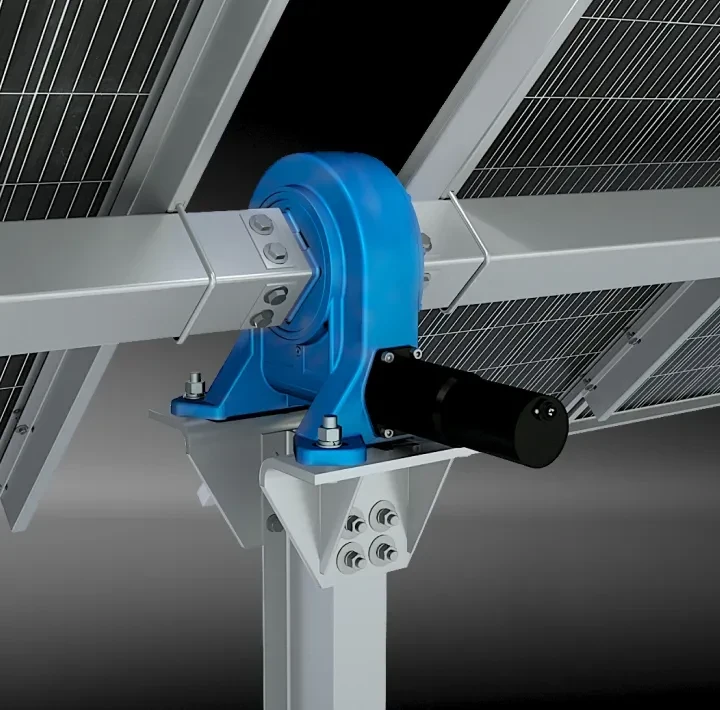
Trackers need strong direct irradiance to pay back the drive, controls and moving parts. On high-DNI sites with expensive land, the extra yield per hectare usually justifies the cost; on diffuse-light sites a fixed frame at the optimum tilt is the better engineering answer.
Foundations follow the soil report
Driven piles suit competent soil and keep installation fast. Where penetration is restricted, concrete pads or ballast blocks replace them — and the frame design has to be revised, because the restraint conditions change.
About the author
DYNAMIC system engineering team — sizing, topology and commissioning support for residential, C&I and marine projects.


